There comes a point, in every dementia patient, that constant care becomes an issue. They can function for years on their own (depending on the form and progression of their disease), but at some point it becomes necessary to bring in outside help.
My dad and I had a deep conversation (about a week ago) discussing life, our situation with my mom and the future. We talked about some tough issues, not all of which I will share. One topic happened to be about bringing in outside help. My mom seems to be doing okay functioning on her own throughout the day; but then again, nobody is really there all day to supervise her and see exactly what goes on. We know that she takes her medicine, naps and plays games on the computer. Occassionally she will do dishes or a load of laundry. What else does she do with her day?
There have been a couple of issues that have been concerning us as well. For instance, she had one of her medications switched; she does not feel like it is working to help her headaches, so she started taking some over-the-counter medicine as well. Not a big deal...except that one day we found her taking more medication before she was supposed to, because "it's not working". Obviously that could become an issue with overdosing.
We've noticed more and more that she is subsituting meals with Ensure. I suppose it's good that she's getting something in her system (I know this can be a struggle for many people, and Ensure is one solution for the problem). However, she complains of an upset stomach frequently, which I believe could be due to medications and a liquid diet. We have been trying to make sure that she is eating at least 2 solid meals (lunch and dinner) and leaving the Slim Fast or Ensure for breakfast.
A couple weeks ago we were over at their house for family dinner. I had plugged in the rice cooker and was filling up the rice cooker pot with water. My mom came along and put her hand inside the outer shell of the cooker (which was hot). She freaked out and ran to the sink, rinsing her hand under cold water; I'm not sure what would posess her to put her hand inside the cooker. Later that night, she was washing some food down the garbage disposal and something slipped down the drain into the disposal. She put her hand in the sink as if she was going to put it down the drain to retrieve whatever had fallen. I quickly yelled at her to turn off the garbage disposal, which she did. Luckily, everything was okay.
These may be small, isolated incidences, but it seems like mom is becoming more careless and clumsy. While she may not be putting herself in direct danger right now, we want to make sure that it does not escalate to that point before we realize there's a problem.
After discussing matters with my dad, we decided it would be a good idea to get some people over there during the day. There are few intentions with this:
1. Keep her company so she is not sitting in front of the computer all day long.
2. Observe her and make sure that she is safe and eating properly.
3. Help clean up around the house-it has been an overwhelming task for my dad to keep up on the housework, and mom is unable to perform her tasks that she once engaged in so faithfully. (If you missed my post about housecleaning, you can read about it by clicking here).
This is the hard part, getting people over there. I have spent the past couple weeks going over (a couple times per week) to visit and help clean. Mom does not comprehend the reasoning behind my coming over, so I just tell her I am there to help her clean and to visit with her. Each time I go, mom asks,
"Why do you feel like you always have to come over here to help me when you have your own house to take care of?"
By 1:00, she is practically kicking me out the door, because "it's time for my nap and your kids are too noisy." (On a side note...my one year old is generally asleep in the back room and I put a movie on for my 4 year old during this time, so it's really not too noisy). Nevertheless, I insist that it will be fine for her to take a nap, assure her that she does not have to entertain me, and that I will continue cleaning up until I need to leave to get my other kids from school. She is a little resistant, and I was a little unsure if I should stick around. After talking with dad, however, we concluded that she is going to have to get used to having people around and to continue to stay there for our allotted time to help, despite her resistance.
In my observations, I have noticed a couple of things that need to be addressed for anyone who is there caring for her during the day. One is mealtime. When she makes herself a meal (especially if it is left overs from the fridge), the food needs to be inspected to assure that it is okay. She has attempted to eat rotting food and is unable to tell when things have gone bad; my dad and I are trying our best to keep up on cleaning the contents of the fridge weekly.
Something else to watch her on is the mail. She likes to check the mail everyday and occassionally open things and misplaces them. I think she's finally beginning to understand that she is supposed to leave the mail on the couch for my dad, but if her name is on it, she will open it. She doesn't understand most of what she is reading. Yesterday she got junk mail from a jeweler. She had a look of puzzlement on her face as she questioningly repeated,
"So-n-so Jewelry?" (I forgot the name of the Jeweler) "Huh? I don't know what so-n-so Jewelry is...why are they sending me this??"
I told her it was junk, she could toss it. She replied with,
"No, I have to leave it here for your dad." Good girl ;)
For now, I have committed to going over 1-2 times a week. My job is organizing, decluttering and of course monitoring and visiting. I have an Aunt who volunteered to go over on Thursdays. I let her know our monitoring issues and asked that she can just help keep up on some surface cleaning (dusting, bathrooms, etc). My mom still likes to load her own dishwasher, so we leave that job for her ;) I have another Aunt and Uncle, who are on vacation for a few weeks, who have said they would try to come over once a week to do the same. That gives us help 3-4 times a week for now, which I think is sufficient at this point.
Taking care of someone with dementia can be daunting, at times. I know it will only continue to become more difficult. I just hope and pray that we will have the support of our family when the time comes that she will need true, 24 hour, round-the-clock care.
Tuesday, August 28, 2012

Saturday, August 25, 2012
A Couple Items of Business
I wanted to make mention of a couple of things on my blog, for those who don't follow my facebook page.
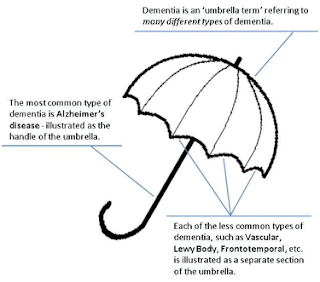
First, my family is participating in a "Walk To End Alzheimer's" in honor of my mom. I have a goal to raise $500 for this walk. So far I have collected $305 (with a few others who have said they will mail their donation in)...which means I am almost at my goal. If you feel inclined to sponsor me in this walk, please click here to visit my Walk Page. The money raised goes towards research, support/resources for families affected and eventually a cure for Alzheimer's. My mom does not have Alzheimer's, but it all falls under the umbrella of dementia. I haven't yet found a walk for FTD, and I figure doing something is better than doing nothing!!
Also, I have nominated my dad to receive a free cruise. The contest is specifically for caregivers. I can think of no one more deserving than my dad! Aside from caring for my mom, he took care of my grandpa every single day, many nights getting no sleep before going to work the next day, as he was dying of Lou Gehrig's. He is one of the most selfless, giving people I know and I would love to lift his spirits and help him to win this vacation. The contest started in July and ends on September 15th. YOU CAN VOTE EVERYDAY!!!! (once a day) Please bookmark the link and go back to vote everyday! I just nominated him a couple of days ago and he's already ranked #64 out of 1,038 contestants. That tells me we have a good chance of moving up fast if everyone takes an extra minute out of their day to vote!
CLICK HERE to go directly to my dad's page, and vote for him!
Thank you all for your continued support and friendship for our family through this difficult time.
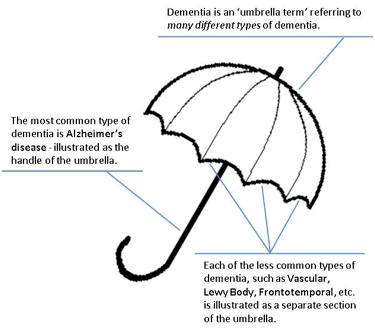
First, my family is participating in a "Walk To End Alzheimer's" in honor of my mom. I have a goal to raise $500 for this walk. So far I have collected $305 (with a few others who have said they will mail their donation in)...which means I am almost at my goal. If you feel inclined to sponsor me in this walk, please click here to visit my Walk Page. The money raised goes towards research, support/resources for families affected and eventually a cure for Alzheimer's. My mom does not have Alzheimer's, but it all falls under the umbrella of dementia. I haven't yet found a walk for FTD, and I figure doing something is better than doing nothing!!
Also, I have nominated my dad to receive a free cruise. The contest is specifically for caregivers. I can think of no one more deserving than my dad! Aside from caring for my mom, he took care of my grandpa every single day, many nights getting no sleep before going to work the next day, as he was dying of Lou Gehrig's. He is one of the most selfless, giving people I know and I would love to lift his spirits and help him to win this vacation. The contest started in July and ends on September 15th. YOU CAN VOTE EVERYDAY!!!! (once a day) Please bookmark the link and go back to vote everyday! I just nominated him a couple of days ago and he's already ranked #64 out of 1,038 contestants. That tells me we have a good chance of moving up fast if everyone takes an extra minute out of their day to vote!
CLICK HERE to go directly to my dad's page, and vote for him!
Thank you all for your continued support and friendship for our family through this difficult time.
Thursday, August 23, 2012
Housekeeping
When I was growing up, my mom was an immaculate housekeeper. I mean it. You could take a white glove to any part of her house at any given time and it would remain white.
Saturdays were her cleaning days. We did our jobs during the week as well, believe you me! But every single Saturday was deep cleaning day. Every square inch of the house was dusted, vacuumed, scrubbed, mopped. She wouldn't do anything "fun" until all the chores were done.
She had us trained, too. On Saturdays, we were not allowed to go out to play or hang out with friends until our assigned chore was completed. If it didn't meet her satisfaction, we were sent back in to redo the job.
Over the past couple of years, my mom's house has been less than immaculate. At first, it was clutter piles building up. Around the time this started, my grandparents died and my dad was bringing home and sorting through their things; my grandma was a hoarder, so it was more than just a couple of boxes of stuff, to say the least. We chalked the mess up to grandma and grandpa's "stuff".
As time went on, we began noticing more than just clutter. The first time I realized that there was a real problem was when I went to use the bathroom and discovered mold in the toilet. I couldn't believe my eyes! How could this have happened??? My mom would NEVER allow such uncleanliness in her house!
The more and more time went on, the less and less housework seemed to be getting done. Soon, dust was settling on picture frames and furniture. Floors went longer and longer between moppings. Dishes were beginning to pile on the counters for, sometimes, days before she would tend to them. It seemed she had completely forgotten the jobs that needed to get done. When we would bring the topic up for discussion, mom just complained that she was too tired and sweaty to finish her tasks, or she would make comments such as,
"Yeah I did dust the pictures before," not seeming to realize that this is an ongoing task.
I watched my dad struggle to keep a balance with work and the new roles he was having to assume. Mom and dad always had very traditional roles in our home: dad went to work and mom took care of the home. My dad has always worked long, hard days (in the construction business) and mom was more than happy to take care of the rest of the household duties, along with the help of us kids. I can remember a time or two seeing my dad scrub toilets or do some dishes, but for the most part he's never had to worry about that role.
A few months ago, I realized that we, as a family, needed to step in and take some of this burden off of my dad. I made a goal to go over once a week to help with some housecleaning. I started out doing well...and then summer came and I had all 5 kids at home with me! A couple of times, I took the kids with me to help with some of the chores.
One day, as I worked on decluttering and organizing bookshelves, my two teenagers gave the kitchen a good scrub down. They started by unloading and loading the dishwasher before cleaning the stove and countertops. My mom came in and just about had a conniption fit.
"What are you doing? Those dishes are clean," she said when she saw the girls loading the dishwasher. Upon explanation, she turned to the cabinet to inspect the clean dishes that were just put away.
"No! You're not doing it right! These are still wet, now you're messing them up! I leave them in there for many hours to dry. I have my own way to do this, too! And I have my own way of putting in the dishes, too. You're not doing it right!"
I tried to talk calmly to her and assure her that the girls were only trying to help.
"No!" was the answer she continued to give, with a disapproving shake of her head.
I admit, I felt a little defensive of my girls. They were giving time out of their summer to come over and help, and I was afraid mom might have hurt their feelings. Luckily, as I later apologized to the girls for my mom's reaction, they were very loving and forgiving.
"It's okay. We know it's not her fault, she doesn't mean it."
Eventually, I was able to calm mom down and convince her to leave the kitchen-only after reassuring her that I would make sure all the dishes were dried and put away in the right places.
As you can see, there's been a learning to curve to helping mom. I'm slowly learning which chores I can take on, and which I should leave for my mom. The chores she continues to do are dishes (though they will sit for a couple days sometimes), laundry and she will vacuum the living room rug. Occassionally she will clean the toilet in her bathroom. It is a short list, and she only works in 10-15 minute intervals before she gets too tired and too sweaty and needs to lay down for a rest. She's more likely to get off the couch and work when someone else is over there working, so I feel like me being over there is good motivation to get her doing something productive, even if it's only for short intervals.
As I've been over there this week, I have focused on decluttering and organizing. I've thrown out several boxes of trash and started another big box to give to Goodwill. I've been able to finish 2 bedrooms, the Tupperware cupboard, and the towel/sheet cupboard. At the beginning, mom uneasily paced nearby to make sure I wasn't messing anything up or throwing anything important out. Occassionally she would get in my way, on a quest to look for something. Eventually, she retreated to the office where played her computer game until naptime.
My new goal is to go over once or twice a week to finish decluttering and organizing the house. I'm also going over to observe mom and make sure she's okay by herself throughout the day, which I'll write about another day (I know, I said that in the last post, too). Other family members have offered to come over and help as well...we'll see how that goes. I think if I focus on the organization issues, anyone else can focus on the surface cleaning. Hopefully, we can relieve at least some of the stress that has been placed on my dad since this whole journey has begun.
Saturdays were her cleaning days. We did our jobs during the week as well, believe you me! But every single Saturday was deep cleaning day. Every square inch of the house was dusted, vacuumed, scrubbed, mopped. She wouldn't do anything "fun" until all the chores were done.
She had us trained, too. On Saturdays, we were not allowed to go out to play or hang out with friends until our assigned chore was completed. If it didn't meet her satisfaction, we were sent back in to redo the job.
Over the past couple of years, my mom's house has been less than immaculate. At first, it was clutter piles building up. Around the time this started, my grandparents died and my dad was bringing home and sorting through their things; my grandma was a hoarder, so it was more than just a couple of boxes of stuff, to say the least. We chalked the mess up to grandma and grandpa's "stuff".
As time went on, we began noticing more than just clutter. The first time I realized that there was a real problem was when I went to use the bathroom and discovered mold in the toilet. I couldn't believe my eyes! How could this have happened??? My mom would NEVER allow such uncleanliness in her house!

The more and more time went on, the less and less housework seemed to be getting done. Soon, dust was settling on picture frames and furniture. Floors went longer and longer between moppings. Dishes were beginning to pile on the counters for, sometimes, days before she would tend to them. It seemed she had completely forgotten the jobs that needed to get done. When we would bring the topic up for discussion, mom just complained that she was too tired and sweaty to finish her tasks, or she would make comments such as,
"Yeah I did dust the pictures before," not seeming to realize that this is an ongoing task.
I watched my dad struggle to keep a balance with work and the new roles he was having to assume. Mom and dad always had very traditional roles in our home: dad went to work and mom took care of the home. My dad has always worked long, hard days (in the construction business) and mom was more than happy to take care of the rest of the household duties, along with the help of us kids. I can remember a time or two seeing my dad scrub toilets or do some dishes, but for the most part he's never had to worry about that role.
A few months ago, I realized that we, as a family, needed to step in and take some of this burden off of my dad. I made a goal to go over once a week to help with some housecleaning. I started out doing well...and then summer came and I had all 5 kids at home with me! A couple of times, I took the kids with me to help with some of the chores.
One day, as I worked on decluttering and organizing bookshelves, my two teenagers gave the kitchen a good scrub down. They started by unloading and loading the dishwasher before cleaning the stove and countertops. My mom came in and just about had a conniption fit.
"What are you doing? Those dishes are clean," she said when she saw the girls loading the dishwasher. Upon explanation, she turned to the cabinet to inspect the clean dishes that were just put away.
"No! You're not doing it right! These are still wet, now you're messing them up! I leave them in there for many hours to dry. I have my own way to do this, too! And I have my own way of putting in the dishes, too. You're not doing it right!"
I tried to talk calmly to her and assure her that the girls were only trying to help.
"No!" was the answer she continued to give, with a disapproving shake of her head.
I admit, I felt a little defensive of my girls. They were giving time out of their summer to come over and help, and I was afraid mom might have hurt their feelings. Luckily, as I later apologized to the girls for my mom's reaction, they were very loving and forgiving.
"It's okay. We know it's not her fault, she doesn't mean it."
Eventually, I was able to calm mom down and convince her to leave the kitchen-only after reassuring her that I would make sure all the dishes were dried and put away in the right places.
As you can see, there's been a learning to curve to helping mom. I'm slowly learning which chores I can take on, and which I should leave for my mom. The chores she continues to do are dishes (though they will sit for a couple days sometimes), laundry and she will vacuum the living room rug. Occassionally she will clean the toilet in her bathroom. It is a short list, and she only works in 10-15 minute intervals before she gets too tired and too sweaty and needs to lay down for a rest. She's more likely to get off the couch and work when someone else is over there working, so I feel like me being over there is good motivation to get her doing something productive, even if it's only for short intervals.
As I've been over there this week, I have focused on decluttering and organizing. I've thrown out several boxes of trash and started another big box to give to Goodwill. I've been able to finish 2 bedrooms, the Tupperware cupboard, and the towel/sheet cupboard. At the beginning, mom uneasily paced nearby to make sure I wasn't messing anything up or throwing anything important out. Occassionally she would get in my way, on a quest to look for something. Eventually, she retreated to the office where played her computer game until naptime.
My new goal is to go over once or twice a week to finish decluttering and organizing the house. I'm also going over to observe mom and make sure she's okay by herself throughout the day, which I'll write about another day (I know, I said that in the last post, too). Other family members have offered to come over and help as well...we'll see how that goes. I think if I focus on the organization issues, anyone else can focus on the surface cleaning. Hopefully, we can relieve at least some of the stress that has been placed on my dad since this whole journey has begun.
Monday, August 20, 2012
The Forgotten Faces
When I sit down to write, I usually have a clear idea of which direction I want to take my post. Tonight, I don't even know where to start.
It's been an emotional day as reality is beginning to sink in on what is to come with this horrible disease. I am fighting back the tears even now, as I write.
Today, I went over to my mom's house-partly to observe her (I'll write more about this another day), and partly to help her organize some of the clutter that is overtaking her house. Mom has been asking me to help her organize her photos. She has most of them organized in boxes, which she started long before she was "sick". She wanted me to help her find my old school pictures and duplicates of baby photos so I could take them home.

As I brought out a large storage tub of family pictures, and began rummaging through them, my mom sat on the couch, watching me sort. She picked up a large envelope of pictures and pulled out a large photo of a baby boy and girl, sitting side by side, and said, "I wish I could remember who all these people are."
It took me a minute to catch my breath. I stared at her for a few seconds and replied, matter-of-factly, "Mom, it's me and Joe." I felt very confused, how could she forget the faces of her twin babies??
I thought maybe it was a fluke. Maybe she wasn't paying enough attention or she got confused. Or maybe I knew, but I just wasn't ready to accept it. As we continued sorting, I occassionally quizzed her on who different people were in the pictures we came across. It broke my heart to watch her struggle to remember the faces of the people she loves so dearly.

"Looks familiar...it's not Joe, is it?" she asked, as I showed her a picture of her firstborn grandbaby.
Jeremy was her pride and joy. She doted on him like any proud grandma you've ever seen.
She always loved this picture, in his little vest and adorable coordinating hat (she even helped picked it out, if I remember correctly). This picture hung on her filing cabinet at work for years as she was filled with great pride to show off her grandson.
We finally found some of my school pictures. This was my Kindergarten class picture? Can you pick me out in the crowd?
 My mom was very confused when she saw the picture. She was expecting to see me as an adult. Maybe it's because I used to work for the school district, and she had many class photos of her own with her class. She squinted at the picture, pointed at teacher and said,
"That's not you, is it?"
"Mom, this picture was taken in 1986. I was only 5 years old," I said back.
"Oh...I'm confused, I don't see you in this picture." She ran her finger over each and every kid in the class 3 times before her finger finally rested on the girl in the front row donning a red, velvet, jumper dress.
"That one is me, mom," I said, reassuring her that she found the right girl.

It seemed that almost every picture of the past that I presented to her brought on confusion. If the person looked vastly different than they do today, she did not recognize them. Obviously we look very different now than we did as babies. Her memory of how we looked at that time seems to have disappeared. I even showed her a picture of herself, in her younger years, that she could not recognize.
"Is this you?" she asked, as she glanced at me, then back at the picture.
"No," she answered her own question. "But it's reddish hair too but I don't remember who that is."
When I told her that it was her, she answered with,
"I don't recall ever looking like that."

I thought for sure she would recognize this picture: the love of her life, my dad. I showed her one of the favorites of dad, taken when he was 15 years old, sporting a wooden bead necklace which he later gave to her. We used to love this picture when we were kids, chuckling that dad had long hair and was wearing a necklace! I was sure this picture would do the trick.
"Hmmm...I don't know. Kind of reddish hair too...I don't know who this is..."
When I told her it was dad, she said,
"No. That's not him. I don't remember him looking like that."
That was the point that reality smacked me square in the face. My mom's memory is being erased. She is forgetting the ones she's loved the most. Sure, it's just faces of the past that she can't recall. But what is to come in the future?
My heart aches that my mom cannot recognize my face in the past. I can't imagine the pain that will come when the day is here that she does not recognize me in the present.
It's been an emotional day as reality is beginning to sink in on what is to come with this horrible disease. I am fighting back the tears even now, as I write.
Today, I went over to my mom's house-partly to observe her (I'll write more about this another day), and partly to help her organize some of the clutter that is overtaking her house. Mom has been asking me to help her organize her photos. She has most of them organized in boxes, which she started long before she was "sick". She wanted me to help her find my old school pictures and duplicates of baby photos so I could take them home.

As I brought out a large storage tub of family pictures, and began rummaging through them, my mom sat on the couch, watching me sort. She picked up a large envelope of pictures and pulled out a large photo of a baby boy and girl, sitting side by side, and said, "I wish I could remember who all these people are."
It took me a minute to catch my breath. I stared at her for a few seconds and replied, matter-of-factly, "Mom, it's me and Joe." I felt very confused, how could she forget the faces of her twin babies??
I thought maybe it was a fluke. Maybe she wasn't paying enough attention or she got confused. Or maybe I knew, but I just wasn't ready to accept it. As we continued sorting, I occassionally quizzed her on who different people were in the pictures we came across. It broke my heart to watch her struggle to remember the faces of the people she loves so dearly.

"Looks familiar...it's not Joe, is it?" she asked, as I showed her a picture of her firstborn grandbaby.
Jeremy was her pride and joy. She doted on him like any proud grandma you've ever seen.
She always loved this picture, in his little vest and adorable coordinating hat (she even helped picked it out, if I remember correctly). This picture hung on her filing cabinet at work for years as she was filled with great pride to show off her grandson.
We finally found some of my school pictures. This was my Kindergarten class picture? Can you pick me out in the crowd?

"That's not you, is it?"
"Mom, this picture was taken in 1986. I was only 5 years old," I said back.
"Oh...I'm confused, I don't see you in this picture." She ran her finger over each and every kid in the class 3 times before her finger finally rested on the girl in the front row donning a red, velvet, jumper dress.
"That one is me, mom," I said, reassuring her that she found the right girl.

It seemed that almost every picture of the past that I presented to her brought on confusion. If the person looked vastly different than they do today, she did not recognize them. Obviously we look very different now than we did as babies. Her memory of how we looked at that time seems to have disappeared. I even showed her a picture of herself, in her younger years, that she could not recognize.
"Is this you?" she asked, as she glanced at me, then back at the picture.
"No," she answered her own question. "But it's reddish hair too but I don't remember who that is."
When I told her that it was her, she answered with,
"I don't recall ever looking like that."

I thought for sure she would recognize this picture: the love of her life, my dad. I showed her one of the favorites of dad, taken when he was 15 years old, sporting a wooden bead necklace which he later gave to her. We used to love this picture when we were kids, chuckling that dad had long hair and was wearing a necklace! I was sure this picture would do the trick.
"Hmmm...I don't know. Kind of reddish hair too...I don't know who this is..."
When I told her it was dad, she said,
"No. That's not him. I don't remember him looking like that."
That was the point that reality smacked me square in the face. My mom's memory is being erased. She is forgetting the ones she's loved the most. Sure, it's just faces of the past that she can't recall. But what is to come in the future?
My heart aches that my mom cannot recognize my face in the past. I can't imagine the pain that will come when the day is here that she does not recognize me in the present.
Sunday, August 19, 2012
Stages/Progression of Dementia
I read a link today with a scale for stages and progression for dementia. I posted it to my facebook page, but I thought it would be helpful to post it here as well, for those who do not follow my facebook page. I copied it directly from Dementia Care Central; check this website for more information on dementia.
Global Deterioration Scale for Assessment of Primary Degenerative Dementia (GDS) (also known as the Reisberg Scale):
Stage 1: No Dementia
No Cognitive Decline
In this stage the person functions normally, has no memory loss, and is mentally healthy. People with NO dementia would be considered to be in Stage 1.
------------------------------------------------------------------------------
Stage 2: No Dementia
Very Mild Cognitive Decline
This stage is used to describe normal forgetfulness associated with aging; for example, forgetfulness of names and where familiar objects were left. Symptoms are not evident to loved ones or the physician.
------------------------------------------------------------------------------
Stage 3: No Dementia
Mild Cognitive Decline
This stage includes increased forgetfulness, slight difficulty concentrating, decreased work performance. People may get lost more often or have difficulty finding the right words. At this stage, a person's loved ones will begin to notice a cognitive decline.
Average duration: 7 years before onset of dementia
------------------------------------------------------------------------------
Stage 4: Early Stage
Moderate Cognitive Decline
This stage includes difficulty concentrating, decreased memory of recent events, and difficulties managing finances or traveling alone to new locations. People have trouble completing complex tasks efficiently or accurately and may be in denial about their symptoms. They may also start withdrawing from family or friends, because socialization becomes difficult. At this stage a physician can detect clear cognitive problems during a patient interview and exam.
Average duration: 2 years
------------------------------------------------------------------------------
Stage 5: Mid-Stage
Moderately Severe Cognitive Decline
People in this stage have major memory deficiencies and need some assistance to complete their daily activities (dressing, bathing, preparing meals). Memory loss is more prominent and may include major relevant aspects of current lives; for example, people may not remember their address or phone number and may not know the time or day or where they are.
Average duration: 1.5 years
------------------------------------------------------------------------------
Stage 6: Mid-Stage
Severe Cognitive Decline (Middle Dementia)
People in Stage 6 require extensive assistance to carry out daily activities. They start to forget names of close family members and have little memory of recent events. Many people can remember only some details of earlier life. They also have difficulty counting down from 10 and finishing tasks. Incontinence (loss of bladder or bowel control) is a problem in this stage. Ability to speak declines. Personality changes, such as delusions (believing something to be true that is not), compulsions (repeating a simple behavior, such as cleaning), or anxiety and agitation may occur.
Average duration: 2.5 years
------------------------------------------------------------------------------
Stage 7: Late-Stage
Very Severe Cognitive Decline (Late Dementia)
People in this stage have essentially no ability to speak or communicate. They require assistance with most activities (e.g., using the toilet, eating). They often lose psychomotor skills, for example, the ability to walk.
Average duration: 2.5 years
------------------------------------------------------------------------------
This chart is geared more towards those affected by Alzheimer's. It's hard to estimate with my mom exactly where she's at, although UCLA said that she was "moderately advanced". The symptoms and progression differ with each form of dementia, but if I were to guesstimate which stage she is in, I would say between 5 and 6.
If you suspect your loved one has dementia, please visit this site for more information on the disease. Or visit my resources page for more helpful links.
Thursday, August 16, 2012
Driving Miss Deana
Have you ever been a driver, in your car, with a passenger who tells you every move you need to make? They may tell you to 'turn here', 'move to that lane over there', 'you need to slow down'...
Since my mom has lost her license, she has become the WORST backseat driver that I've had the experience of driving ;) I think a large part of this is her expressing her opinion of what a great driver she is. She is still adamant that UCLA was wrong, and that she's a perfectly safe driver. She reviews all the rules of the road while we are out and about, I'm sure to prove what a good driver she is. She will often make comments,
 "See even I don't go fast over the speed limit like you do and like your dad does too".
"I remember what those things are right there, what they mean too, it means to stop. I don't know why they cancelled my driving, I'm still really good and still know all the rules."
"You're going a little bit over the lines too, and your dad does that too, and I don't even do that 'cause I'm still such a really safe driver".
"You need to get over to that lane over there now, you're gonna turn up there at the light so I always get over to the other lane right here" (she will say this miles before we need to turn and becomes insistent that I change lanes right away).
Her memory on how to get to places she visits often is still intact. This is classic with FTD. I don't know whether this is a blessing or a curse. Because she knows exactly how to get somewhere, she insists that you take her way. If you deviate from her course, she becomes really upset.
I learned this, one day, as I was driving her to the pharmacy. The distance from her house to the pharmacy is maybe a mile. There are several different ways to get there; you can take the main street or you can go the back way through the neighborhood. Even going the back way through the neighborhood leaves you with three different options of streets to turn on. On this particular trip, I turned down the "wrong" street.
"Where are you going??! You were supposed to turn that way! It's shorter that way! Why are you going this way??" Her back stiffened, she sat up straight and turned her body toward the window, peering out the window at the course I had strayed from.
I replied, "Mom it's okay. This street will take me there too. Besides, I'm pretty sure this way is shorter."
She was not to be convinced. "It is NOT! That's the best way to go, you're going the long way! You need to go down that other street!"
I tried to calmly assure her that we were fine; either way would get us to the pharmacy and either way we took, it would only be quicker by a matter of seconds. She would not let the issue go. Finally, she hollered at me,
"You're just like your dad!" And with that, she slumped down into her seat and crossed her arms sternly across her chest.
Just as her memory for driving familiar routes has been preserved, so has her memory of her past, particularly her childhood. It amazes me how she can recall events from her childhood clear as crystal, yet her memory of what everyday objects are is rapidly declining. I suppose it is just the area of the brain that has been affected. Semantic memory includes a general knowledge of things, not concerning specific events. Semantic refers to the memory of meanings and understanding. For now, her memory of events are intact, though even those will fade over time.
Mom was born and raised in Riverside. As we drive around town to run errands, she has memories attached to every place we drive by. And she shares each and every memory with us as we drive her around. As I drove her downtown one day, she recalled in some detail a tire shop that was down the road which her friend's family had owned.
"Did I ever tell you about the tire shop down that way? The owner people lived down the street when I was a child. I've thought about stopping by there sometime, but now that I'm no longer a driver I can't unless you would take me by there sometime, but you probably wouldn't want to do that. But I would tell them I'm a Harrington too and they would remember me too. They always really liked me too."

She loves to drive by Overland Street, where her and my dad were neighbors at 13 and 14 years old. There are many memories attached to that part of town, and she loves to reminisce about the good 'ol days. My mom is the second one in from the left, and my dad is the shirtless rebel sitting on the hood of the car ;)
As I drove her to get her hair cut today, she talked the entire time about memories of different places we passed, all stemming back to her childhood. I could hardly get a word in; and even if I did say something, she didn't seem to notice. Most times, I just give the occassional nod and "uh huh" or generic "that's nice" type of comments. She seems content to talk and have someone to listen.
Often times, one memory will spark another. For example, as we drove through La Sierra she remembered a restaurant that once stood on the corner of the intersection which made her remember her ex-boyfriend.
"It was a really yummy Mexican food place too, one of those fast food type places too. And I remember those Mexican boys that I dated too 'cause the Mexican boys always really liked me too. And there was the one I dated before your dad and I got back together and he turned out to be not such a nice person too and he was in that war thing" (the military) "so I'm really glad that we broke up too and that I was with your dad again, because he's so good..." She rambled on for several minutes sharing her memories and thoughts about that time period of her life.
Many of the things we hear, while driving her about, are repeated over and over. I am well versed on the history of her life in Riverside and consequently, much of her childhood. Sometimes, I admit, it gets a little old. But other times, such as today, I remind myself that it's a great thing that she is able to remember parts of her life. The day will come when she no longer remembers. So I remind myself to enjoy the moments that we have, while she is still able to speak and share these meaningful memories of her life.
Since my mom has lost her license, she has become the WORST backseat driver that I've had the experience of driving ;) I think a large part of this is her expressing her opinion of what a great driver she is. She is still adamant that UCLA was wrong, and that she's a perfectly safe driver. She reviews all the rules of the road while we are out and about, I'm sure to prove what a good driver she is. She will often make comments,

"I remember what those things are right there, what they mean too, it means to stop. I don't know why they cancelled my driving, I'm still really good and still know all the rules."
"You're going a little bit over the lines too, and your dad does that too, and I don't even do that 'cause I'm still such a really safe driver".
"You need to get over to that lane over there now, you're gonna turn up there at the light so I always get over to the other lane right here" (she will say this miles before we need to turn and becomes insistent that I change lanes right away).
Her memory on how to get to places she visits often is still intact. This is classic with FTD. I don't know whether this is a blessing or a curse. Because she knows exactly how to get somewhere, she insists that you take her way. If you deviate from her course, she becomes really upset.
I learned this, one day, as I was driving her to the pharmacy. The distance from her house to the pharmacy is maybe a mile. There are several different ways to get there; you can take the main street or you can go the back way through the neighborhood. Even going the back way through the neighborhood leaves you with three different options of streets to turn on. On this particular trip, I turned down the "wrong" street.
"Where are you going??! You were supposed to turn that way! It's shorter that way! Why are you going this way??" Her back stiffened, she sat up straight and turned her body toward the window, peering out the window at the course I had strayed from.
I replied, "Mom it's okay. This street will take me there too. Besides, I'm pretty sure this way is shorter."
She was not to be convinced. "It is NOT! That's the best way to go, you're going the long way! You need to go down that other street!"
I tried to calmly assure her that we were fine; either way would get us to the pharmacy and either way we took, it would only be quicker by a matter of seconds. She would not let the issue go. Finally, she hollered at me,
"You're just like your dad!" And with that, she slumped down into her seat and crossed her arms sternly across her chest.
Just as her memory for driving familiar routes has been preserved, so has her memory of her past, particularly her childhood. It amazes me how she can recall events from her childhood clear as crystal, yet her memory of what everyday objects are is rapidly declining. I suppose it is just the area of the brain that has been affected. Semantic memory includes a general knowledge of things, not concerning specific events. Semantic refers to the memory of meanings and understanding. For now, her memory of events are intact, though even those will fade over time.
Mom was born and raised in Riverside. As we drive around town to run errands, she has memories attached to every place we drive by. And she shares each and every memory with us as we drive her around. As I drove her downtown one day, she recalled in some detail a tire shop that was down the road which her friend's family had owned.
"Did I ever tell you about the tire shop down that way? The owner people lived down the street when I was a child. I've thought about stopping by there sometime, but now that I'm no longer a driver I can't unless you would take me by there sometime, but you probably wouldn't want to do that. But I would tell them I'm a Harrington too and they would remember me too. They always really liked me too."

She loves to drive by Overland Street, where her and my dad were neighbors at 13 and 14 years old. There are many memories attached to that part of town, and she loves to reminisce about the good 'ol days. My mom is the second one in from the left, and my dad is the shirtless rebel sitting on the hood of the car ;)
As I drove her to get her hair cut today, she talked the entire time about memories of different places we passed, all stemming back to her childhood. I could hardly get a word in; and even if I did say something, she didn't seem to notice. Most times, I just give the occassional nod and "uh huh" or generic "that's nice" type of comments. She seems content to talk and have someone to listen.
Often times, one memory will spark another. For example, as we drove through La Sierra she remembered a restaurant that once stood on the corner of the intersection which made her remember her ex-boyfriend.
"It was a really yummy Mexican food place too, one of those fast food type places too. And I remember those Mexican boys that I dated too 'cause the Mexican boys always really liked me too. And there was the one I dated before your dad and I got back together and he turned out to be not such a nice person too and he was in that war thing" (the military) "so I'm really glad that we broke up too and that I was with your dad again, because he's so good..." She rambled on for several minutes sharing her memories and thoughts about that time period of her life.
Many of the things we hear, while driving her about, are repeated over and over. I am well versed on the history of her life in Riverside and consequently, much of her childhood. Sometimes, I admit, it gets a little old. But other times, such as today, I remind myself that it's a great thing that she is able to remember parts of her life. The day will come when she no longer remembers. So I remind myself to enjoy the moments that we have, while she is still able to speak and share these meaningful memories of her life.
Monday, August 13, 2012
The "Oops" Card
Taking little kids out in public can, at times, be very embarassing. Around the time my daughter, Aubrey, turned 3 years old, she began noticing people and different characterstics of their appearance. She was not quiet in voicing what was on her mind.
The first time this happened was when we were sitting in the waiting room of the doctor's office for her baby brother's six week check-up. A very "busty" woman walked in and checked in with the doctor next to ours. Aubrey took one look at this voluptuous woman, and with wide eyes, turned to me and declared,
"Mommy, she has really big boobs!!"
The next incident was the following day, when I took her with me for my own check-up. We were in the elevator, heading up to the third floor of the doctor's office with a very friendly, older, and heavy set lady with a walker. She made some conversation with Aubrey as we went up and when the door opened, we politely let her step out first. As she made her way out, her back end facing us, Aubrey exclaimed,
"Mommy, her butt is so big!"
A few minutes later, after we had checked in with the receptionist, and as I hid myself away from this dear lady in the waiting room to prevent further humiliation, Aubrey noticed a man sitting across from us.
"He is WAY bigger than you, mommy," she said, pointing her tiny finger at the man.
Two days later, we stopped by Burger King for dinner. A young, black girl stood in front of us in line. Aubrey looked at her for a couple minutes, then told me (and the rest of Burger King),
"Mommy, her skin is brown!"
After four incidences in the course of a few days, I was ready to hide away in my house and never take her out in public again. I was shocked and mortified at the words that came out of my daughter's mouth. After each incident, I took the opportunity to explain, as best I could to an innocent three-year-old, that the things she was saying were not appropriate and could hurt people's feelings. Try as I might, the fact of the matter is simple: kids have no filter!
People with dementia are very much the same: they have no filter. At least this is the case with my mom's form of dementia. Whatever is on their mind is on their tongue. The difference with children and with dementia patients is that children are teachable. Eventually they learn how to behave. Lucky for me, my daughter is smart; after this long and embarassing week of incidences, we had some talks and she came to understand that those comments make people feel sad or embarassed. A dementia person will not understand this concept, no matter how hard you try to teach them how to behave properly!
The more the disease progresses, the worse it becomes. I find myself (as does my family) tense up a little bit when we take her out because we don't know what-off-the wall thing she will say or do. A few weeks ago, I took her to the grocery store. I, of course, picked the shortest line to check out. Mom was disappointed because she loves Beverley, a cashier who has been there for years. Not to worry, though. She made sure to call to Beverley from across the store (as everyone in her line observed).
"Beverley! My spiritual sister!" She continued after she checked out and quickly walked over to Beverley, "I really believe that you are my spiritual sister, too. In my religion, we're all brothers and sisters too so you are like my sister spiritually."
Sometimes, while we are checking out, she will bring up random topics or completely ignore the cashier's questions or conversations altogether. While she can still communicate what is on her mind, she can't comprehend much of what is being said to her. Most times, I find myself speaking for her when a cashier or sales representative is asking her a question. I think most times people can figure out that there's something not quite right. Other times, however, I get the look that says, "I wasn't talking to you." This happened one day at Kohl's. Mom was trying to use her coupons as she checked out. She had two coupons: one was a 15% off when using her Kohl's card, the other was 20% off a purchase of $100 or more without using the Kohl's card. Of course, she wanted to use the 20% off, but she didn't comprehend that she couldn't use her Kohl's card for it (and she was adamant to use the Kohl's card). Aside from the card issue, mom was using a combination of gift cards along with the credit card, so her total after the gift card was less than $100. Therefore, she couldn't use the 20% off coupon at all. The cashier tried explaining this to her, but mom couldn't make sense of what she was saying. I then tried explaining it to her myself with the same result. I finally turned to the cashier and told her that she would just use the 15% off coupon with her Kohl's card. The cashier ignored me and turned back to my mom, seeming a little flustered that she wasn't "getting it". I finally interjected and said in a low voice,
"She doesn't understand what you're saying, she has dementia."
The cashier's attitude immediately changed and she turned her attention to me, listening to what I had prompted her to do. She was patient with mom through the rest of her transaction.
Even though my mom didn't hear or understand what I was saying to cashier, I still hate to say it in front of her. Who knows what she hears and understands deep down? And I don't want her to feel embarassed or stupid.
In Susan's book (I've mentioned her book before, you can read that post here), she talks about the "oops card". Basically, it's a card that you hand to people while out with your loved one explaining that they have a disability and can't understand you. After this and several other incidences, my family and I decided it was time to make our own "oops" cards.
There are a few ways to skin a cat. The suggestion Susan made in her book was to go to the association for frontotemporal lobe dementia. There are templates that you can use and print them out on cards at home, using premade cards, such as these:

The other option is to order your own through a printing company. I used vistaprint, since they are free (aside from shipping). And they also have cute templates :) Our cards read,
"Please be patient with my companion. She has a brain disease called semantic dementia, which makes it difficult for her to communicate and understand what you are saying."
I feel like this is a less embarassing approach for my mom while we are out, to help other people to understand and be patient with her while we interact with them. The only regret I have is not addressing the behavior aspect on the card. One of the template suggestions from the AFT is to write "(s)he is not drunk or on drugs, (s)he has a disease..." With the embarassing behaviors, and stares from onlookers, this bit of information might have been helpful to include on the card. Oh well...next time.
My hope is by handing out these cards, people will be more patient with my mom. But along with that, I hope to raise awareness on this disease. How many times are we out in our daily lives and see people acting a little "off"? Do we ever stop and wonder if there might be something more to their strangeness, such a disease that alters their behavior? Knowledge is power. As is awareness.
So this whole post got me to thinking...I wonder if I can get these cards made up for my kids??? ;)
Subscribe to:
Posts (Atom)